 Foreign News Service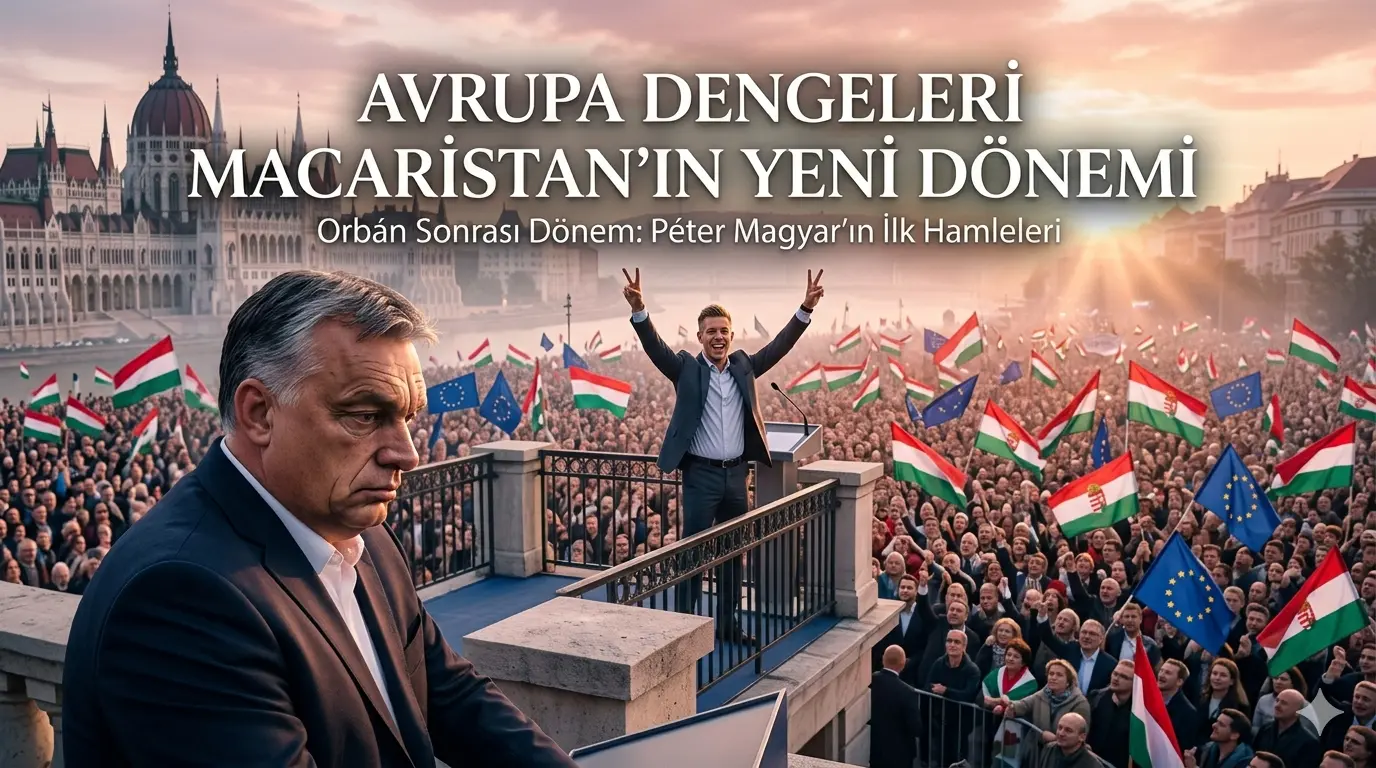
Hungary is experiencing a historic turning point. The end of Viktor Orban's 16-year reign, which became synonymous with "illiberal democracy" in European politics, has sent shockwaves across the continent. The electoral victory of the Tisza Party, led by Pater Magyar, signifies not only a change of government in Budapest but also the opening of a brand new chapter in the balance of power between blocs, stretching from Brussels to Kyiv, and from Moscow to Washington.
While expectations for the fight against corruption and economic restoration within the country are at their peak, the real major upheaval is expected to occur in the corridors of the European Union. Diplomatic files that have long been locked in Brussels, conducted under the shadow of blackmail and vetoes, are now back on the table.
The thawing of relations with Brussels and the multi-billion euro knot.
With the election results finalized, the first topic that caught the attention of the international community was Hungary's normalization process in its relations with the European Union, which had almost reached "cold war" levels. The Orban administration had been an isolated actor within the EU due to violations of the rule of law, interference with judicial independence, and "anti-democratic" laws.
According to Hungarian diplomatic sources, the new administration's first action will be to initiate the process of joining the European Public Prosecutor's Office (EPPO). This move by the fresh leader will undoubtedly be the strongest message of confidence to be given to EU institutions.
📊 Key Data: Blocked Funds and Support Packages on the Table
- EU-Suspended Hungarian Funds: €20-30 Billion
- Ukraine Support Package: €70-90 Billion
Reuters’Senior EU diplomatic sources speaking to [the news outlet] say that the gradual release of these funds is "highly likely" once Peter Magyar presents his urgent action plan on the rule of law to Brussels. Opening the taps on this massive €20-30 billion resource would be a lifeline for the Hungarian economy, which has been struggling for years with high inflation and a depreciating Hungarian Forint. However, this would not only benefit Hungary but also directly secure Ukraine's long-term financial balance of tens of billions of euros, which has been constantly held up by the threat of a Hungarian veto.
A historic turning point in Hungary: How will its energy and Russia policies change?
One of the issues Magyar emphasized most throughout his campaign was putting an end to the unpredictable shifts in the country's foreign policy. He made this point very clear in his victory speech on election night:
“We will pursue a foreign policy that is in line with Europe, transparent and predictable. Hungary will not be a Trojan horse between East and West, but an honorable part of the Western alliance.”
This strategic statement, especially energy dependence and Russia This marks a critical turning point in relations. Under Orbán, Hungary signed new agreements with Gazprom while the rest of Europe was rapidly moving away from Russian fossil fuels, and Foreign Minister Péter Szijjártó regularly visited Moscow. Furthermore, the Paks II nuclear power plant project, undertaken by the Russian state company Rosatom, drew criticism from Western allies.
The Hungarian government is expected to increase LNG capacity via Croatia to diversify its energy supply and to utilize EU funds for renewable energy infrastructure. Of course, ending Hungary's 80% dependence on Russian natural gas overnight is physically impossible; however, even a shift in political rhetoric away from "advocating for Moscow" will strengthen Europe's unified stance against Russia.
The 'Domino' Effect on the European Right and the Rebirth of Visegrád
For far-right and populist movements in Europe, Viktor Orban was not only a leader but also a 'model' and 'financier'. For figures like Meloni in Italy, Le Pen in France, and Wilders in the Netherlands, Budapest was a safe haven against Europe's liberal values.
Budapest-based political analyst Andras Toth, He summarizes the continent-wide repercussions of the historic turning point in Hungary with these words:
“This change will profoundly affect not only Hungary, but also the momentum of populist movements across Europe. Orbán’s defeat has broken the backbone of formations like ‘Patriots for Europe’ in the European Parliament. The nationalist and anti-EU right has lost its biggest stronghold and logistical hub.”
On the other hand, it has been out of commission for years. Visegrád Group The dynamics of (V4 – Poland, Czech Republic, Slovakia, Hungary) are also shifting. The alignment of Donald Tusk's pro-EU government in Poland with Magyar in Hungary suggests that Central Europe is becoming more aligned with Brussels' stance.“problematic child”This could transform it from being a mere "inferiority" into a powerful engine of EU integration once again.
Domestic Politics and Cleaning Up the Wreckage: The Challenges Awaiting Magyar
While Europe celebrates Magyar's victory, the 45-year-old new leader carries a heavy burden on his shoulders. Breaking the "oligarchic" system that the Fidesz (Hungarian Civic Union) party built over 16 years, a system that has infiltrated state institutions, the media, and key sectors of the economy, will be far from easy. Magyar faces three critical tests:
- Economic Stability and Meritocracy: Replacing a narrow elite that has enriched itself through inflated government contracts with free market principles and transparency. Stopping the brain drain of young talent.
- Ensuring Media Freedom: The liberation of public broadcasting, which has become a propaganda machine for Fidesz, and the emancipation of monopolized media holdings.
- Rebuilding Trust with the EU: Reforms on paper need to be quickly translated into law to meet Brussels' "Rule of Law" requirements.
In conclusion:
A large majority of the public will choose this election. A historic turning point in Hungary. He describes it as such. We can say that the balance of power in European politics shifted as of April 14th. If Peter Magyar succeeds in 'putting his country back on democratic tracks' and erasing the image of a 'Trojan horse' within the EU, this change will not be limited to Hungary's borders; it will create a powerful democratic domino effect across Europe against 'populist authoritarianism'. Now, all eyes are on the new cabinet's actions in its first 100 days.
Related News:
 “"NATO abandoned us," said Trump, and he started lashing out at everyone!
 New US Tariff Move: Additional Taxes on Chinese Products Under Consideration
 Türkiye's 2026 World Cup fixture list has been announced: opponents and match times have been revealed.
 Real Estate Crisis in China: 5 Key Issues Pressuring the Market After Evergrande