 Foreign News Service
The real estate crisis in China, which began with the liquidation of Evergrande, is still far from over. Housing prices, indebted companies, and government interventions are determining the future of the market.
Evergrande collapsed, but the crisis is not over.
For many years, China's real estate sector was considered one of the country's most powerful engines of growth. Rising housing projects in major cities, land revenues for local governments, and strong public interest in property sustained this model for years. However, the picture today is very different. The collapse of Evergrande is not just the downfall of a single company; it is the clearest example yet that China's long-standing real estate growth model has reached its limits.
Evergrande defaulted on its debts in 2021. The company's debt burden exceeded $300 billion, earning it the title of "the world's most indebted real estate developer." A Hong Kong court ordered the company's liquidation in 2024. The story effectively came to an end in 2025 with Evergrande's delisting from the Hong Kong stock exchange.
But the real issue is this: the collapse of Evergrande did not end China's real estate crisis. On the contrary, the crisis continues, albeit more quietly and widely.
At the heart of the crisis is a trust issue.
The biggest problem in China's housing market is no longer just debt, but trust. For years, people bought homes in unfinished projects. Developers then used the money from these sales to finance new projects. The system was built on the assumption that prices would constantly rise and new buyers would continue to enter the market.
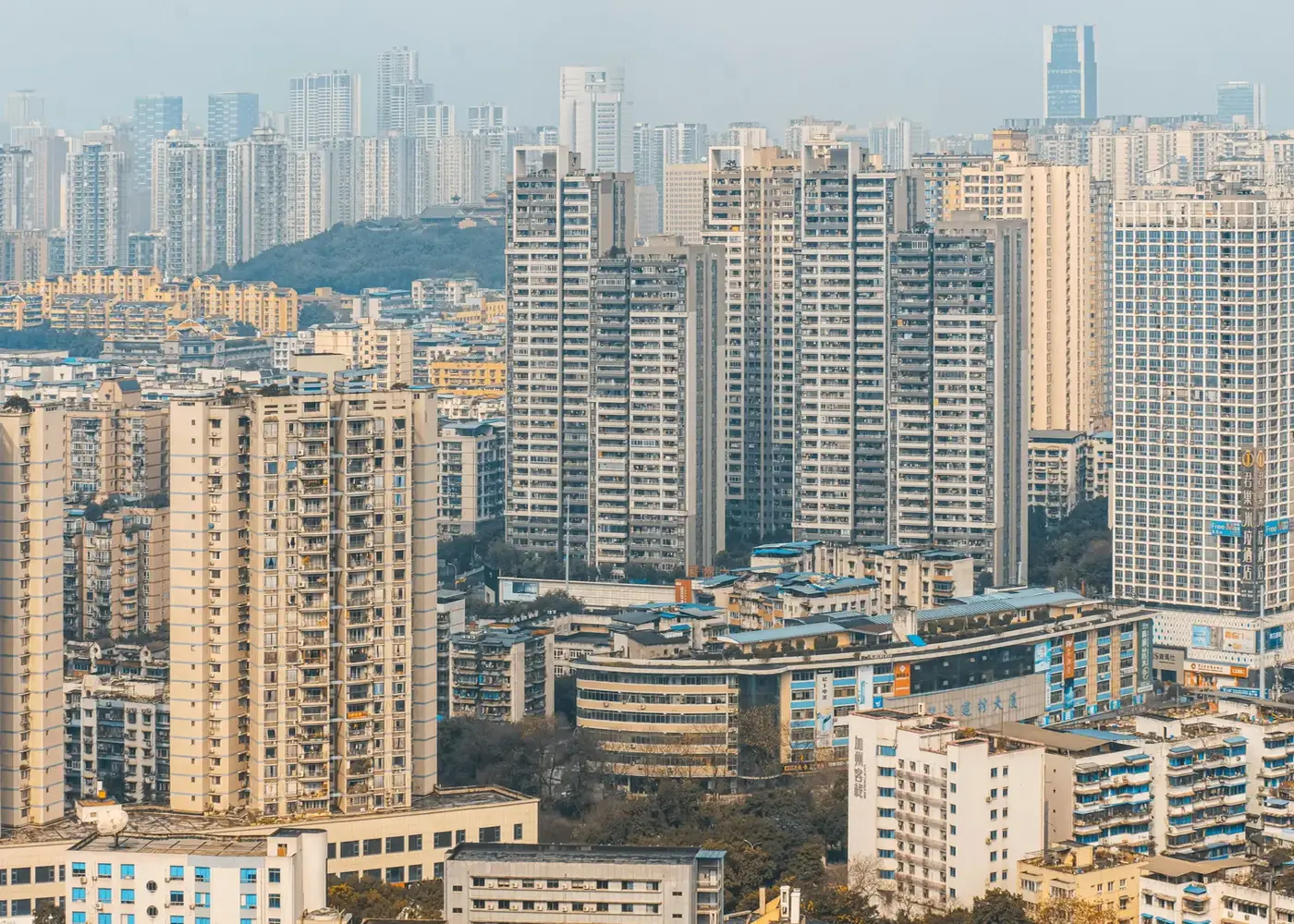
When this cycle was broken, the problem escalated. Buyers began asking, "Will the house I'm buying be delivered?" Developers struggled to find cash. Banks became more cautious. Local governments, meanwhile, were no longer generating as much revenue from land sales as before.
Reuters’According to a survey published in March 2026, housing prices in China are expected to fall by 4 percent in 2026, with the market only stabilizing in 2027. The survey highlights unsold housing stock, demographic changes, employment pressures, and household purchasing power as key challenges facing the sector.
This data is important because it shows that the issue in the market is not a temporary panic. In China, housing is no longer seen as an investment vehicle that automatically generates returns. This shift in perception, This is a more persistent problem than just a price drop.
Country Garden and Vanke are raising alarm after Evergrande.
Following Evergrande, attention has turned to other major developers. Country Garden, long considered one of the more stable companies, has also entered debt restructuring. It is reported that the company is in talks with creditors to restructure its offshore debt and is working on a $14.1 billion debt plan.
A more notable development occurred on the Vanke side. Vanke was considered one of the more secure developers in China due to its state connections. Nevertheless, the company's plans to postpone some bond payments were submitted to investors for approval. Reuters reported that Vanke received approval from creditors to postpone a 1.1 billion yuan payment due in early 2026.
This development has reinforced the question in the market: If even state-backed companies are struggling, how realistic is the recovery of private sector developers?
For China, the real estate crisis is no longer just “the problem of a few poorly managed companies.” The issue is broader: the sector’s financing model, demand structure, and public investment habits are all changing simultaneously.
Beijing has backed down, but a return to the old model is difficult.
In recent years, the Chinese government has implemented rules known as the "three red lines" to limit developers' borrowing. These rules aimed to curb excessive corporate debt. However, the implementation accelerated the liquidity crisis in a sector already burdened with high debt levels.
News emerged in early 2026 that China had lifted these borrowing restrictions. This was interpreted as Beijing wanting to give the sector a new lease on life.
However, there is an important distinction here. Relaxing regulations does not mean returning the market to its former state. Because the problem is not just that companies cannot borrow. Buyers' interest in housing has decreased, the population is aging, and youth unemployment and income concerns are making households more cautious.
In other words, even if Beijing turns on the tap, demand may not be as strong as before.
Why is the global economy watching this crisis unfold?
The Chinese real estate crisis is not just an internal Chinese issue. The real estate sector is directly linked to industries such as steel, copper, cement, furniture, home appliances, and finance. The slowdown in housing investment is reducing demand for commodities, which is putting pressure on countries that export raw materials.
Furthermore, China has been one of the main drivers of global growth for many years. If the Chinese economy grows more slowly due to pressure from the real estate sector, this will also affect world trade.
IMF assessments also emphasize that the transformation of China's real estate sector will not be easy. In particular, it notes that the transition from a real estate-based growth model to a more balanced one will take time.
The PwC fine revealed another side of the crisis.
One of the notable recent developments in the Evergrande case occurred on the audit side. Hong Kong regulators imposed heavy sanctions on PwC Hong Kong for serious errors in Evergrande's 2019 and 2020 financials. PwC reportedly agreed to pay compensation to minority shareholders, with the total sanction reaching 1.3 billion Hong Kong dollars.
This development shows that the crisis is not just about debt and housing sales. Regulatory mechanisms, financial transparency, and investor confidence are also part of this story.
Conclusion: A rapid recovery in the Chinese real estate market is difficult.
The Chinese government does not want to let the market collapse completely. A controlled landing is targeted through liquidity support, debt restructuring, and regulatory relaxation. However, expecting a rapid recovery does not seem realistic.
The biggest challenge facing the Chinese real estate market in the post-Evergrande era is creating a new growth narrative. Because the old model no longer works as well. The era of constantly rising housing prices, developers easily obtaining loans, and the public viewing real estate as a safe haven is coming to an end.
Therefore, the real estate crisis in China is not a case that will be closed with the collapse of a single company. Evergrande was only the first major setback. The real issue is how the Chinese economy will move away from its growth model dependent on real estate. This transition will be painful, and its effects will continue to be felt not only in China but also in global markets.
Related News:
 New US Tariff Move: Additional Taxes on Chinese Products Under Consideration
 Türkiye's 2026 World Cup fixture list has been announced: opponents and match times have been revealed.
 A historic turning point in Hungary: How will the 16-year post-Orban era change the balance of power in the EU?
 The Hejaz Railway Returns: Türkiye at the Center of the Critical Corridor