 Foreign News Service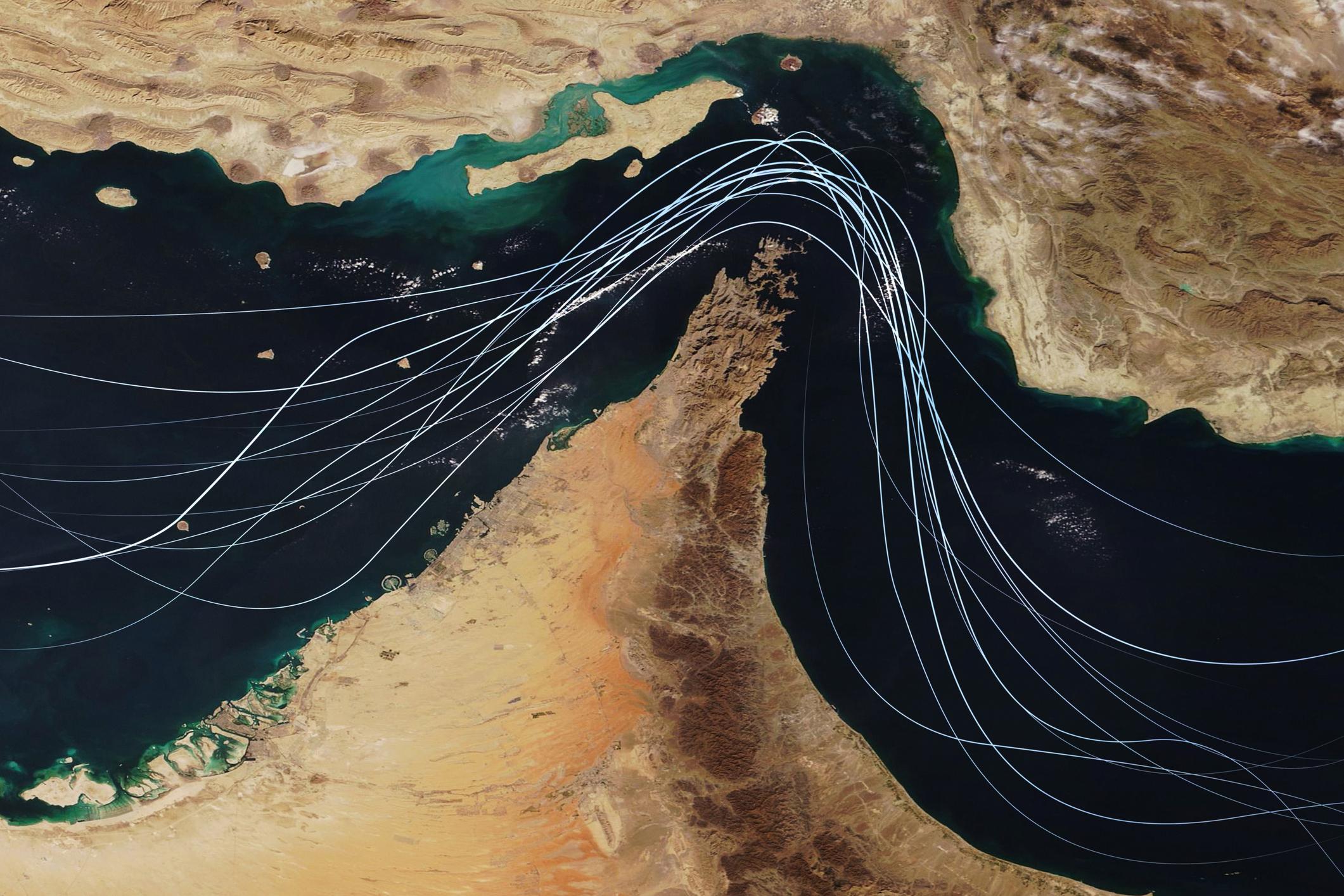
Türkiye, with its strategic location, is at the heart of alternative routes. Middle East’Due to the ongoing war centered in Iran, the Strait of Hormuz, one of the most sensitive points for global trade, has been at the center of attention for weeks. Disruptions in this narrow passage, a key gateway for energy flow, have led to a disruption affecting not only oil prices but also the entire supply chain.
The risk in the Strait of Hormuz is no longer a temporary security issue, but a permanent area of uncertainty.
Every disruption means one of the arteries of global trade is being constricted. Therefore, alternative corridors have become a necessity, not just a preference.
The Strait of Hormuz's Place in Global Trade
The Strait of Hormuz is a narrow passage through which approximately a quarter of the world's oil trade passes.
The fact that 20-25% of global oil trade passes through here, with tens of millions of barrels shipped daily, and that alternative sea routes are both limited and costly, makes this port indispensable to the global economy.
Therefore, every crisis drives oil prices up, multiplying logistics costs as well.

Seeking Alternatives: Road and Rail Corridors
With the increasing risks on sea routes, Gulf countries and regional actors have turned to new trade routes. One of the prominent projects in this regard is the Hejaz Railway, built during the Ottoman era.
Planned Railway Route

This line is not only a new logistics project, but also A modern version of the Hejaz Railway It is also considered that adapting the historical line stretching from Damascus to Medina to today's geopolitics increases the strategic depth of the project.
According to the notes, the line progresses as follows:
- Saudi Arabia (Riyadh – Mecca – Jeddah – Medina – Tabuk)
- Jordan (Amman)
- Syria (Damascus – Homs – Hama – Aleppo)
- Türkiye (Gaziantep – Adana – Ankara – Istanbul)
This route aims to transport cargo originating from the Gulf by land to Türkiye, and from there to Europe and Central Asia.
Why now?
There are three main reasons why this project has been brought up again:
Firstly, there is the security risk. Because the military tension in the Strait of Hormuz has made maritime transport fragile. Another is the cost pressure… Insurance, freight, and delay costs are rapidly increasing. In addition, as we mentioned, there is the need for alternatives. Dependence on a single transit point is no longer sustainable.
Logistics experts also summarize the situation and interpret the revival of the Hejaz route as follows:
“Sea transport was cheap because it was safe. As security risks increase, the cost advantage disappears. The Hejaz Railway, which was established in the past for pilgrimage and trade, is re-emerging today for energy and logistical security.”
Türkiye's Strategic Role
It is clear that Türkiye's prominence in this table is no coincidence:
🔑 1. Geographic center
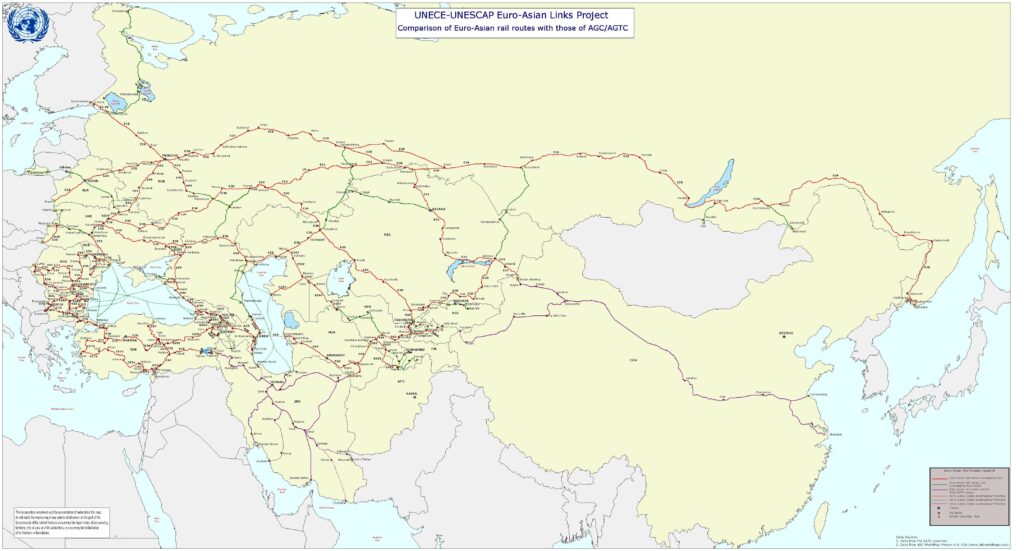
Türkiye is a natural transit point on the Asia-Europe axis.
🔑 2. Multimodal infrastructure
Railway
Highway
Port integration
🔑 3. Alternative lane advantage
It reduces dependence on narrow passages like the Strait of Hormuz.
A comment frequently voiced in economic circles:
“As bottlenecks in energy and trade flows increase, the value of countries with wide passageways multiplies. Türkiye is at the center of this equation.”
Economic Impact: A New Trade Map
If the project is implemented, transportation time from the Gulf to Europe will be shortened, logistics costs will become more predictable, and Türkiye will become a distribution hub beyond being just a transit country.
To compare:
| Criterion | Sea Route (Hormuz) | Railway (Türkiye) |
|---|---|---|
| Security | Low (crisis effect) | More controlled |
| Duration | Wavy | More stable |
| Cost | Growing | Moderately predictable |
| Risk | High | Lower |
Regional Integration and the Political Dimension
The project has not only economic but also political significance.
- A new basis for cooperation between Türkiye, Saudi Arabia, Jordan, and Syria.
- Direct access to Europe for Gulf countries.
- The possibility of a connection extending to Central Asia.
This vision is also clearly stated in official statements:
To Al Arabiya Speaking about the project, Saudi Arabian Transport Minister Saleh al-Jasser stated that work is ongoing on a railway project that will connect Saudi Arabia and Türkiye via Jordan and Syria, and that the joint process is expected to be completed by the end of the year.
Conclusion: The Türkiye-Centered Corridor is Not Just an 'Alternative'
The war with Iran and the blockade of the Strait of Hormuz clearly demonstrated just how fragile global trade is.
Now the issue is not just about developing a new project, sustainability of tradeto guarantee it.
In short, every crisis in the Strait of Hormuz increases Türkiye's strategic value, Hejaz This line is seen as the modern version of the railway., It could become one of the most critical trade projects of the new era.
Related News:
 New US Tariff Move: Additional Taxes on Chinese Products Under Consideration
 Türkiye's 2026 World Cup fixture list has been announced: opponents and match times have been revealed.
 A historic turning point in Hungary: How will the 16-year post-Orban era change the balance of power in the EU?
 Real Estate Crisis in China: 5 Key Issues Pressuring the Market After Evergrande